











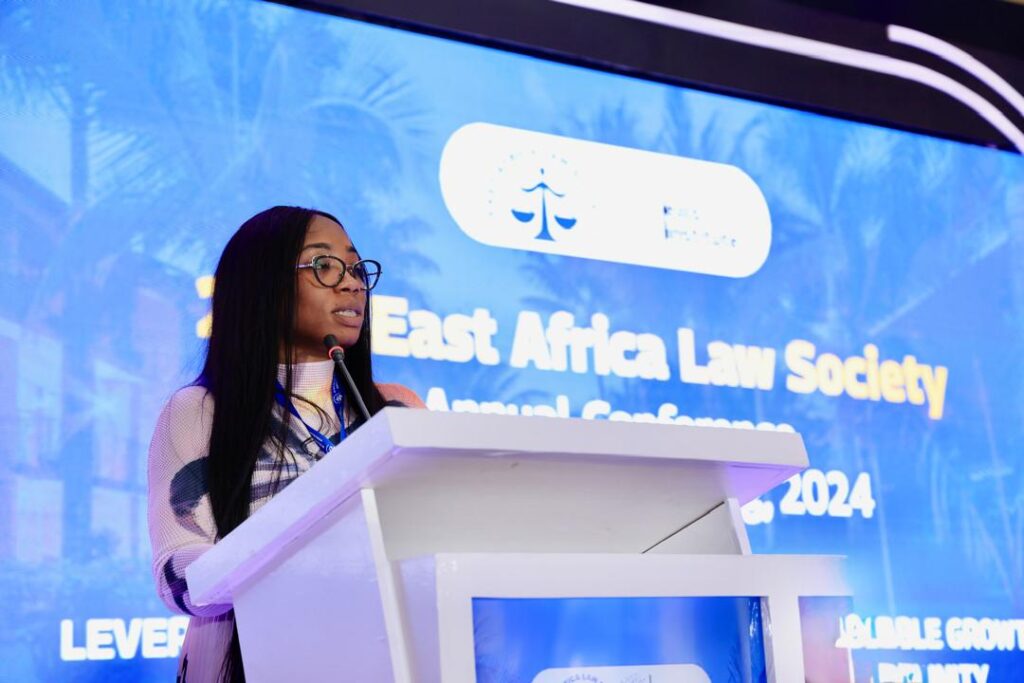
Meet Dr. Jessica Oga, a legal scholar and health policy expert whose work drives women’s health, gender equity, and global health. She holds a First-Class Bachelor of Laws (LL.B.) degree from Benson Idahosa University, an Executive Master from the Geneva Academy in the Law of Non-International Armed Conflicts, a Master of Laws (LL.M.) from Babcock University, and a Doctor of Philosophy (PhD) in Law from Babcock University.

She has extensive experience in health law, policy, and advocacy, influencing initiatives that advance women’s rights and well-being. This includes her work at the Centre for Health Ethics, Law and Development, where she provided legal guidance on programs aimed at improving the lives of women and children. She has also contributed as an independent consultant for Resolve to Save Lives and supported international organizations such as the British Council, International Organization for Migration, and UN Women.
Dr. Oga is currently the Founding Head of the Ubingwa Think Tank at Afya na Haki, a policy hub that translates African-led research into actionable reforms. In this role, she leads agenda-setting, policy analysis, stakeholder engagement, and partnerships to improve sexual and reproductive health outcomes for women across Africa.
We sought an audience with her this month to learn about her journey in advancing the right to health in Africa.

What inspired you to focus on women’s sexual and reproductive health rights?
“My path into this work began with a tension I could not ignore. I was initially drawn to medicine because of its promise to heal, but I kept encountering limits that had less to do with science than with law. Over time, I came to realise that health outcomes are often shaped less through what happens in a clinic than through the legal and social systems that govern people’s lives. Law determines who receives care, whose suffering is recognised, and whose autonomy is respected.
Growing up, I saw how silence and stigma around women’s bodies translated into legal neglect. Issues such as pregnancy, reproductive health, and gender-based violence were often treated as matters of shame rather than justice. That pushed me toward law, where I felt the deeper structural questions could be confronted. You can treat a patient, but if the system that harmed her remains unchanged, the harm continues. Sexual and reproductive health rights sit precisely at that intersection, between the personal and the structural, and between what medicine can do and what law permits or prevents. That is where I knew I wanted to work.”

What does the world still not fully understand about women’s healthcare access in Africa?
“The conversation about African health systems tends to default to infrastructure and funding. Those are real problems, but they are only part of the picture, and focusing on them exclusively misses something important. The legal and social environment is often just as determinative as the availability of a clinic or a doctor. A woman may live near a health facility and still be unable to seek care because she fears judgment, criminalisation, or abandonment by her family.
Many women navigate systems where reproductive health services are surrounded by institutional hesitation, legal ambiguity, or outright criminalisation. Survivors of violence may reach health facilities only to find that providers are unsure how to respond or afraid to. Young girls are pushed out of school because of pregnancy and lose access to the futures they were building. These experiences are rarely captured in the statistics that shape global health policy, yet they define everyday reality for women across the continent. Until the world takes seriously the role that law, stigma, and social context play in shaping access, the health conversation remains incomplete.”
Laws exist on paper. What needs to change for them to become reality?
“What strikes me most in this work is that the absence of law is rarely the problem. Many African countries already have strong legal frameworks-constitutions that protect dignity, national laws that recognise reproductive rights, and regional instruments that set clear obligations. The challenge is the distance between what is written and what is lived. That gap is where women’s health is lost.
And we see this most starkly with those who are already most vulnerable. Women and girls who are internally displaced are perhaps the clearest example, they exist within the same legal frameworks that are supposed to protect them, yet in practice they fall through every gap. Displacement strips away the social networks, documentation, and geographic stability that often determine whether a woman can actually access care. The law may recognise her rights, but the system encounters her as invisible. For these women and girls, the distance between legal promise and lived reality is not just wide, it is the difference between survival and catastrophe.
Closing that gap requires two things above all: accountability and institutional courage. Governments must ensure that health policies are implemented consistently and not simply declared. Healthcare providers need to be protected when they deliver lawful services, rather than left exposed to social or legal pressure. And courts must be willing to take the lived experiences of women seriously as the basis for legal interpretation and remedy. Strategic litigation plays a real role here -it clarifies what the law actually demands and sets precedents that compel states to act. When legal systems start responding to what women actually experience, rights begin to move from paper into practice. That process is slow, but it is real, and it is how durable change gets built.”
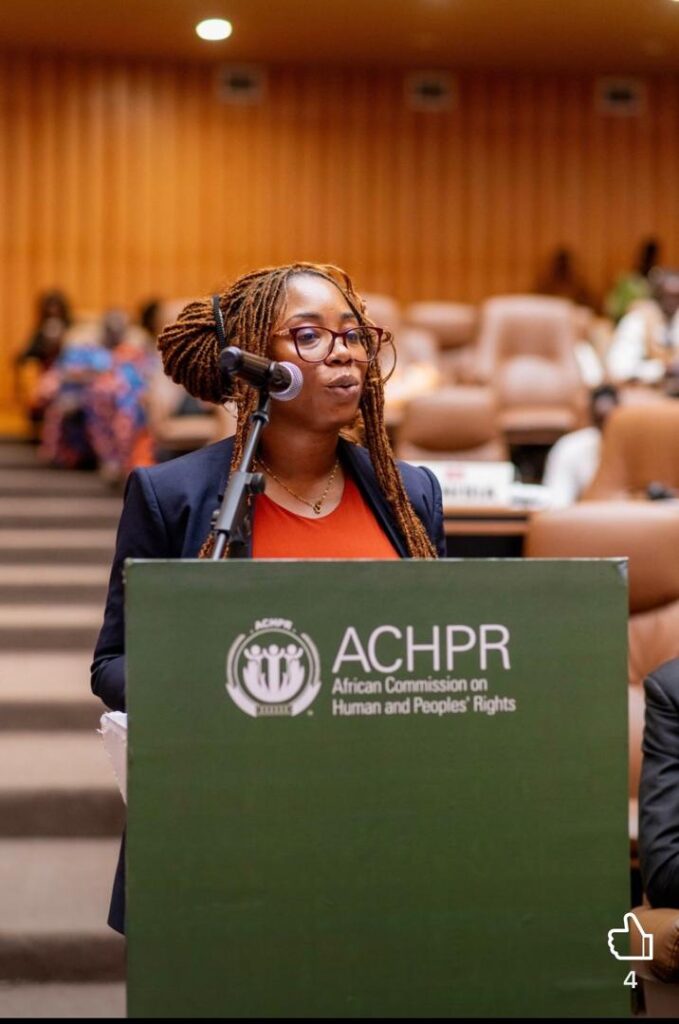
How do research, storytelling, and community voices drive change?
“Research is the foundation because it makes the invisible visible. It allows us to show policymakers, courts, and the public exactly where systems are failing women-not as an abstraction, but with evidence that is difficult to dismiss. Without that documentation, advocacy is fighting with one hand tied. But research alone is cold. Data can describe a problem without conveying its weight, and policymakers who are unmoved by numbers are sometimes reached by stories.
At Afya na Haki Institute, we try to hold all of these things together -research, policy engagement, community voices, and strategic litigation, because none of them is sufficient alone. Evidence from communities informs the legal cases we bring. Those cases generate precedents that create space for policy reform. And storytelling ensures that throughout this process, the human beings behind the statistics are not abstracted away. When community voices enter legal and policy debates, the conversation shifts from what the law technically permits to what justice actually requires. That combination -rigorous evidence, honest narrative, and legal action grounded in lived experience, is one of the most powerful engines of change we have.”
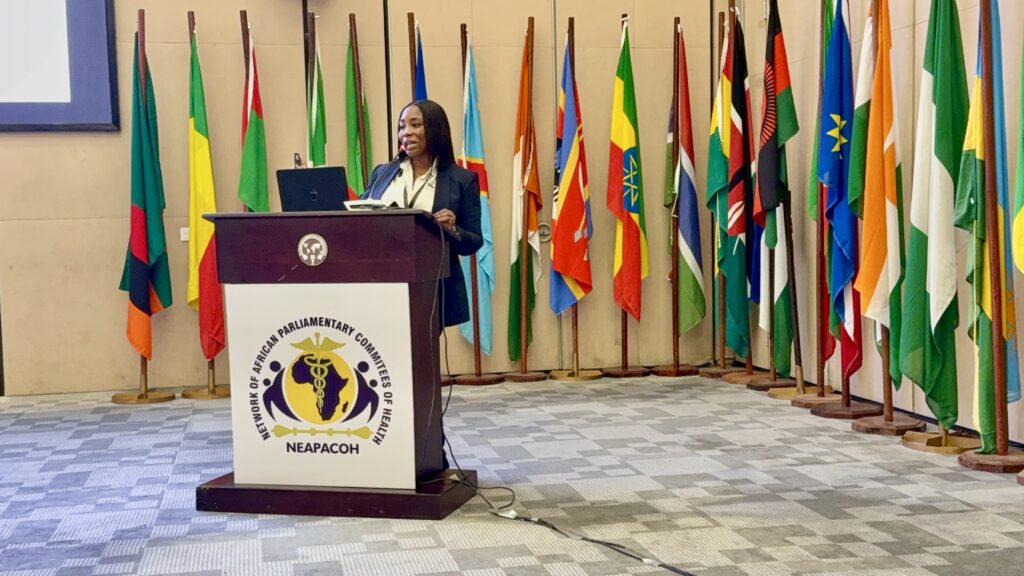
What gives you hope about the future of women’s health rights in Africa?
“What gives me real hope is the growing insistence on Africentric thinking: the conviction that African challenges must be understood and addressed through African histories, African knowledge systems, and African institutional leadership. For too long, many of our health and legal frameworks have been shaped through external assumptions about what justice, progress, and reform should look like. What is emerging now is a generation that is no longer content to inherit those assumptions uncritically. Young African lawyers, researchers, and public health professionals are interrogating systems that were never designed with African realities at the centre, and they are not waiting for permission to imagine something better.
What inspires me even more is that this generation understands that transformation will not come from one field alone. Change requires more than courtroom arguments or policy papers. It requires movement building, regional solidarity, and interdisciplinary thinking that refuses narrow boundaries. They are not simply inheriting problems. They are approaching justice with a creativity and urgency that I find deeply inspiring. Their role is not only to challenge laws that cause harm, but also to construct new legal and policy frameworks rooted in dignity, equity, and collective responsibility. The courage to build, rather than merely critique, is something I see in abundance. That is what makes me optimistic about where this work is headed.”

Moving Forward
Dr. Jessica Oga’s experiences and insights highlight the significance of her work, especially as Africa navigates a shifting global health landscape.
Last year, sudden reductions in international aid disrupted vital health programs, threatening lives and undermining decades of progress across the globe. According to Dr. Tedros Adhanom Ghebreyesus, WHO Director-General, while these cuts have created serious strain on health systems, they have also highlighted the urgent need for countries to strengthen domestic capacity and take greater control over their health resources.
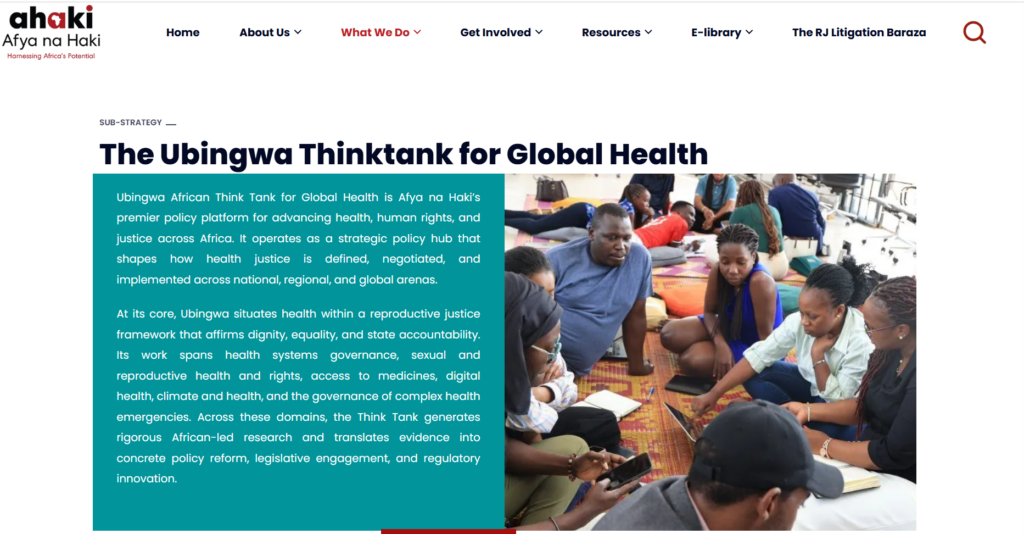
Amid these shifts in global health priorities, Dr. Jessica Oga is playing a leading role in advancing the right to health in Africa. Through Ubingwa Think Tank, she combines Africentric research, strategic partnerships, and sustained engagement with policymakers to strengthen the continent’s authority in health governance. The Think Tank develops policy frameworks that reflect African priorities, embed reproductive justice, and position Africa as a decisive actor in shaping the future of global health.
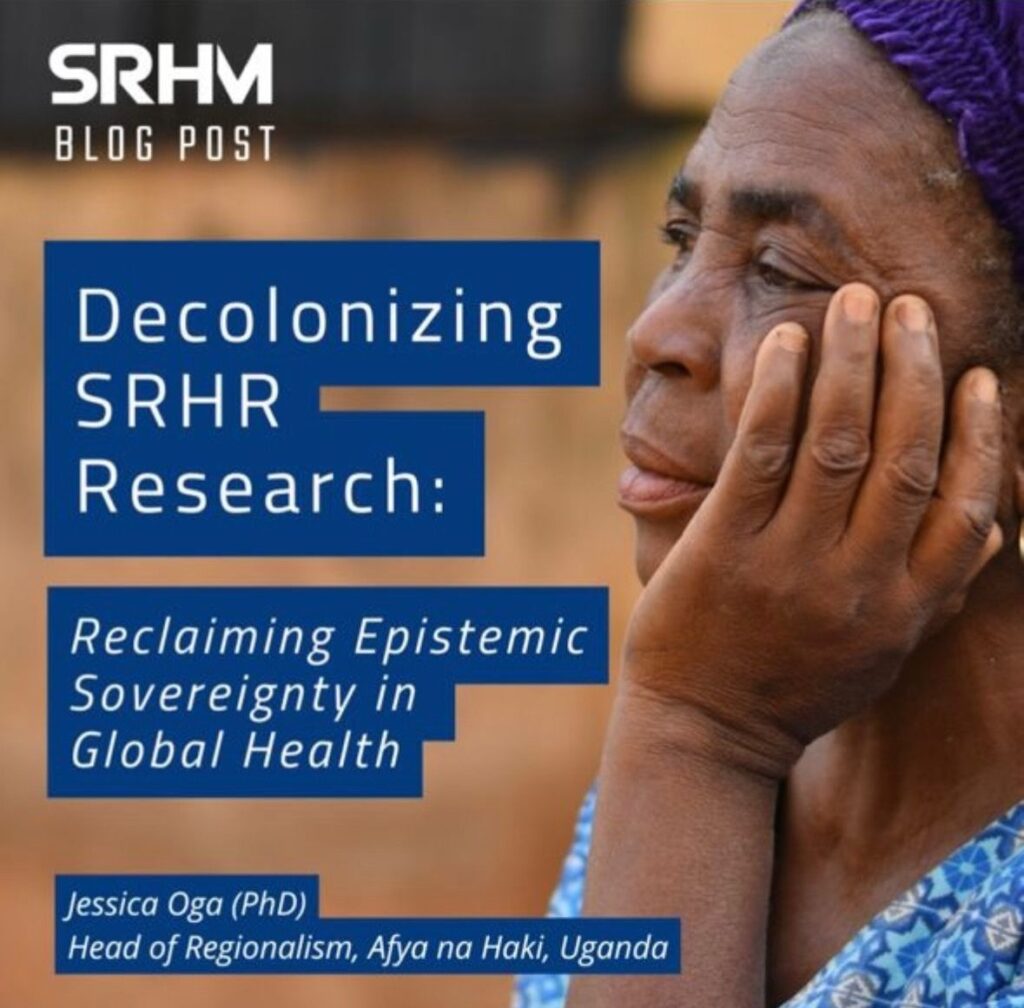
Selected Publications by Dr. Jessica Oga
- Decolonizing SRHR Research: Reclaiming Epistemic Sovereignty in Global Health, https://www.srhm.org/news/decolonizing-srhr-research-reclaiming-epistemic-sovereignty-in-global-health/
- Reproductive health injustice in internally displaced persons camps in Nigeria, https://academic.oup.com/jrs/advance-article-abstract/doi/10.1093/jrs/feaf082/8418228?redirectedFrom=fulltext&login=false
- The WHO pandemic treaty: where are we on our scepticism? https://gh.bmj.com/content/8/6/e012636
- Building resilience: Africa’s strategic path to health security in the age of fragmentation, https://bmjpublichealth.bmj.com/content/4/1/e003761
- Legal reform and female genital mutilation in Sierra Leone, https://www.thelancet.com/journals/lanogw/article/PIIS3050-5038(25)00082-2/abstract
Learn more about her work here: Ubingwa Thinktank – Ahaki