





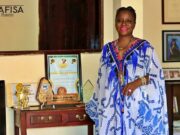


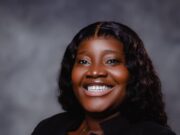

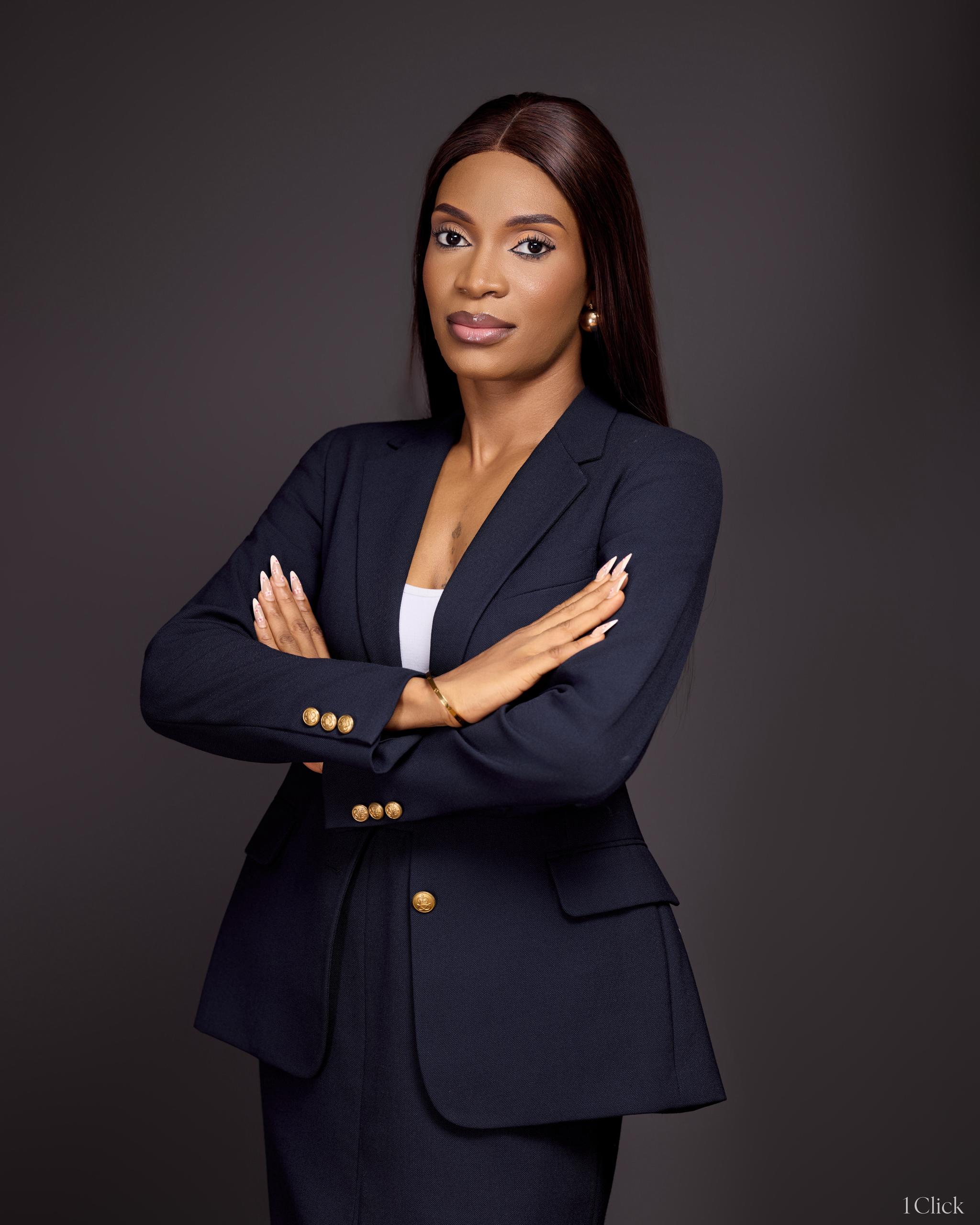
Meet Her Worship Julia-Mary Gbloh, a magistrate in Sierra Leone committed to using her knowledge, skills and abilities to strengthen the pursuit of justice in her country. Her presence on the bench is particularly striking in a judiciary where women have historically been underrepresented.
According to AdvocAid Sierra Leone, as of July 2024, a gender diagnostic study by Legal Access through Women Yearning for Equality Rights and Social Justice (L.A.W.Y.E.R.S.) reported that Sierra Leone had 34 magistrates, of whom only 7 were women. Even with this history, Her Worship’s role stands as a remarkable testament to the strides women continue to make in the judiciary. Magistrate Gbloh’s rise to this position reflects both her rigorous academic preparation and her extensive professional experience.
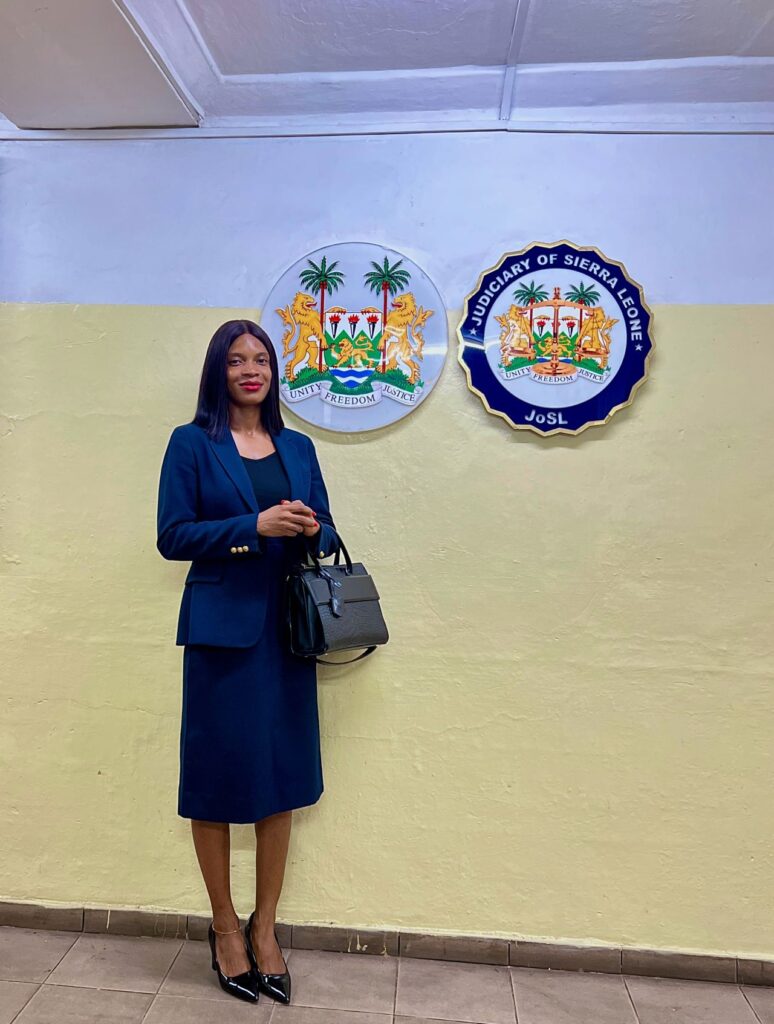
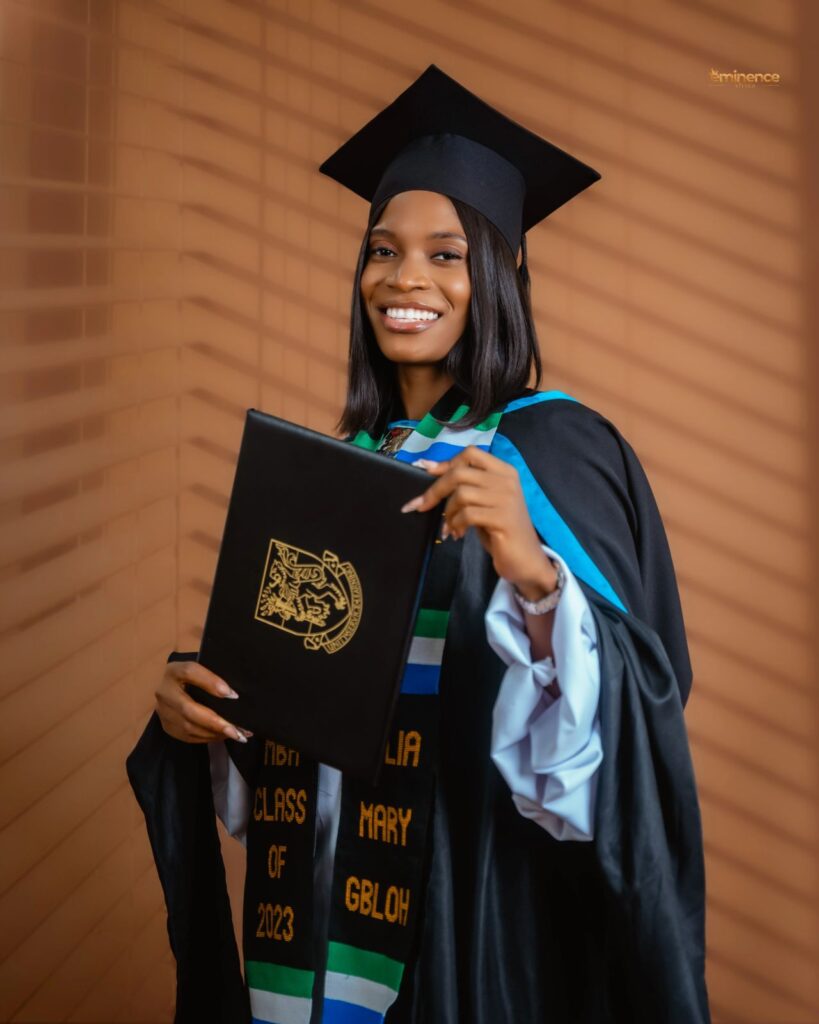
She earned a Bachelor of Laws with Honours (LL.B. Hons) from Fourah Bay College, a Barrister-at-Law (B.L.) qualification from Sierra Leone Law School and a Master of Business Administration (MBA) in Procurement and Supply Chain Management from the Institute of Public Administration and Management.
Alongside her academic achievements, she gained extensive professional experience, serving as a Legal Assistant at Prison Watch Sierra Leone, a Legal Officer at AdvocAid Sierra Leone, Principal of Litigation and Sanctions at the Financial Intelligence Unit of Sierra Leone, and Director of Investigation and Legal Affairs at the Anti-Trafficking in Persons Task Force Agency, among other notable positions.
As a female magistrate, she devotes her time and energy to the cause of justice, reflecting a commitment not only to the rule of law but also to the vital role women play in shaping a fair and accountable judiciary, embodying the spirit of “Give To Gain.”
We have followed her journey for over a decade, tracing her path even before she assumed the role of magistrate. Seeking deeper insight, this author finally requested an audience with her in March to uncover the experiences and motivations that have consistently guided her leadership.
What inspired you to pursue law and what personal experiences shaped your commitment to advancing justice in Sierra Leone?
“Let me tell you how a nine-year-old with big dreams of becoming a doctor ended up on the bench. Spoiler alert: it involves a very quick and very humbling encounter with science.
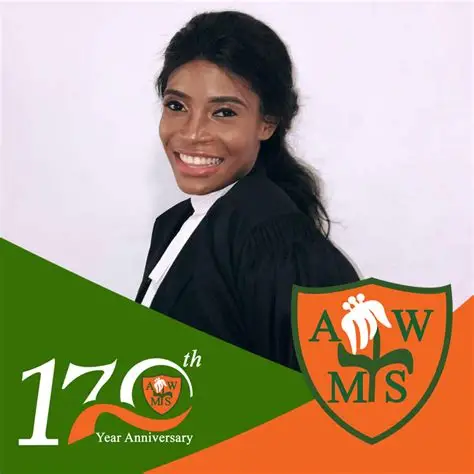
When I sat for the National Primary School Examination and gained admission to the Annie Walsh Memorial School, I was convinced I was destined for medicine. You know how we were as children, always associating success with the most visible paths. Doctor? Impressive. So, when I took the Basic Education Certificate Examination and was placed in S.S.S. 1 Science because of my math performance, I thought, perfect. The universe agrees with me.
Well, the universe and I had a disagreement within two weeks of science class. I realized that I understood absolutely nothing at all. I looked at those formulas and math problems like they were written in ancient Greek. It was my first real lesson in ambition: wanting something is not the same as being suited for it. True alignment requires matching your talents with your passions. So, I did the sensible thing and fled to the Arts.
From the moment I stepped into S.S.S. 1 Arts, it felt like coming home. That uncertainty I had been carrying just evaporated. I decided then that I would study law, and I told myself something that has stuck with me ever since: do it once and do it right.
Looking back, I realize the signs were always there. I was that child, you know, the bold one, quick to speak out, convinced I could fix every injustice I witnessed. Being one of the youngest in every class also meant I developed a special understanding of age-based prejudice. Growing up in modest surroundings gave me an education no classroom could provide. I saw how the lack of information, resources, or fair representation could trap entire families in cycles they could not escape. I did not have the vocabulary for “systemic injustice” then, but I recognized it when I saw it.
By the time I reached Fourah Bay College, I was ready to channel all that youthful exuberance into something productive. I joined the Human Rights Clinic, and suddenly I was not just studying human rights; I was out there preaching them. We had this slogan: “You cannot claim your rights if you do not know them.” We printed it on t-shirts, shouted it at events, and probably annoyed some people with it. But it was true. I served as Secretary-General, which sounds official until you realize it mostly meant organizing events and herding well-meaning but opinionated students. Still, it taught me something vital. Leadership is not about titles. It is about showing up, making fair decisions, and remembering that the people you are leading have lives and stories you know nothing about.
So, here is the honest truth. I did not become a lawyer because nine-year-old me dreamed of prestige. I became a lawyer because somewhere along the way, I understood that the law could be a tool for order, for change, for giving voice to people who have been told they are too young, too poor, too invisible to matter, whether through litigation, policy advocacy, or teaching the next generation.
And honestly, I am glad science and I had that very brief, very awkward relationship. It gave me a good story and the humility to know that sometimes the right path finds you after you have wandered down the wrong one for two weeks.”
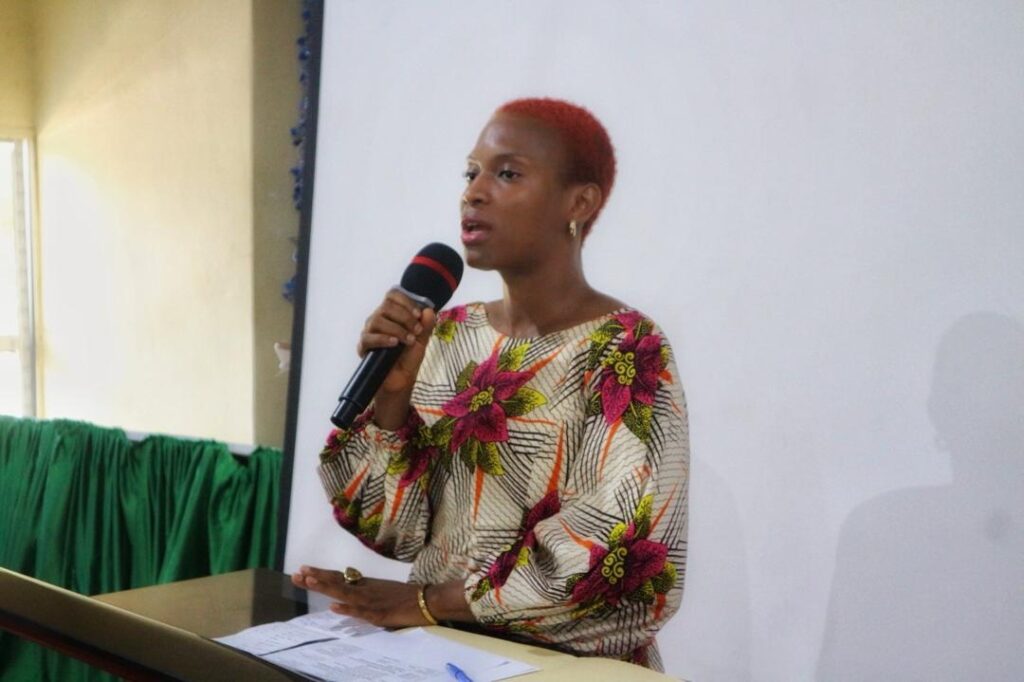
How does your commitment to serving others shape the way you approach your work and your impact?
“You know, people often ask how I ended up in law when I went to the Arts stream, and the honest answer is as old as time in many cultures. I am a firstborn child. It was the practical choice of a stable path to support my family. What I did not expect was how that practical decision would take me on a career journey that has been equal parts purposeful and, frankly, hilarious in its twists and turns.
I started in private practice, learning the ropes of corporate law and legal drafting. My proudest moment there was contributing to a Public Private Partnership draft bill that actually became law. For a young lawyer, that feels like hitting the big leagues. But here is the thing about corporate law: it pays the bills, but it does not always feed the soul. When I joined AdvocAid, it was like someone finally turned the lights on. Suddenly, my work had a face, a story, a name. I learned that my legal skills could directly impact someone’s freedom, safety, and dignity. That is when I realized the law was not just a career; it was a superpower in its own right.
Then I took a sharp left turn into the world of financial crime at the Financial Intelligence Unit. Going from defending individual rights to diving into Anti-Money Laundering felt like switching from poetry to algebra. I spent the first few months wondering if I had accidentally learned a foreign language. But here is where it got interesting. I came to see that chasing dirty money is actually its own form of social justice. When I was asked to collaborate single-handedly with the Law Officers Department on the final draft of what became the Anti-Money Laundering Act 2024, I felt like the universe was playing a practical joke on the girl who almost dropped out of MBA Math. The pride in seeing that legislation passed has been immense, and the irony is not lost on me.
My next adventure was joining the Anti-Trafficking In Persons Taskforce Secretariat as a founding staff member. Founding member sounds glamorous, does it not? It really meant we had to build everything from scratch. I am talking about organizational framework, human resource manual, financial policy, anti-corruption framework, and the kind of documents that make people’s eyes glaze over at parties. But here is the thing about building institutions. The little wins matter. Getting a procedure finalized or a partnership signed felt like scoring goals in a match no one was watching. Those foundations, though seemingly mundane, are what make an institution capable of fighting something as grave as human trafficking.
Now I am in the Judiciary, which has taught me something unexpected. Sometimes impact looks suspiciously like patience. The judiciary is not about flashy victories. It is built to be a well-oiled machine where you do your part and trust the system to deliver justice, even if it takes its sweet time. It has taught me that impact can be both immediate and generational, visible and invisible, long-term or short-term. It also taught me that judgment writing and motherhood require the same skill: endless patience and the ability to function on very little sleep.
The moments that stop me in my tracks, though, are the unexpected ones. Like when two young women from AdvocAid approached me in public to tell me I had left a positive legacy there. I was just trying to relax at a party, and suddenly I had a full-circle moment in the middle of the dance floor. But the best one? A former client from AdvocAid, a reformed commercial sex worker I had worked with, now has a business selling office wear. She is one of my valued contacts. Every time I see her, I think, this is why we do the work. She also has better fashion sense than I do, which is slightly humbling.
So, what have I learned? A legal career is not a straight line. It is more like a badly drawn scribble that somehow connects meaningful dots. It is finding purpose in both the victories you can celebrate and the foundational work that feels invisible until, years later, someone tells you it mattered. And if there is one thing I would add, do the work, but do not take yourself too seriously. The universe has a sense of humor. Just look at the girl who nearly failed MBA Math helping draft financial crime legislation.
Impact does not need to be loud or instantaneous, and just because you feel like your work is not creating the impact you want to see, it does not mean you are not putting in the work. Your work is not a line from point A to point B. It is a circle you pour into the world, and years later, the world sends someone back to show you where the seeds landed. Commit in secret. Work in silence. Impact will find its own voice.”
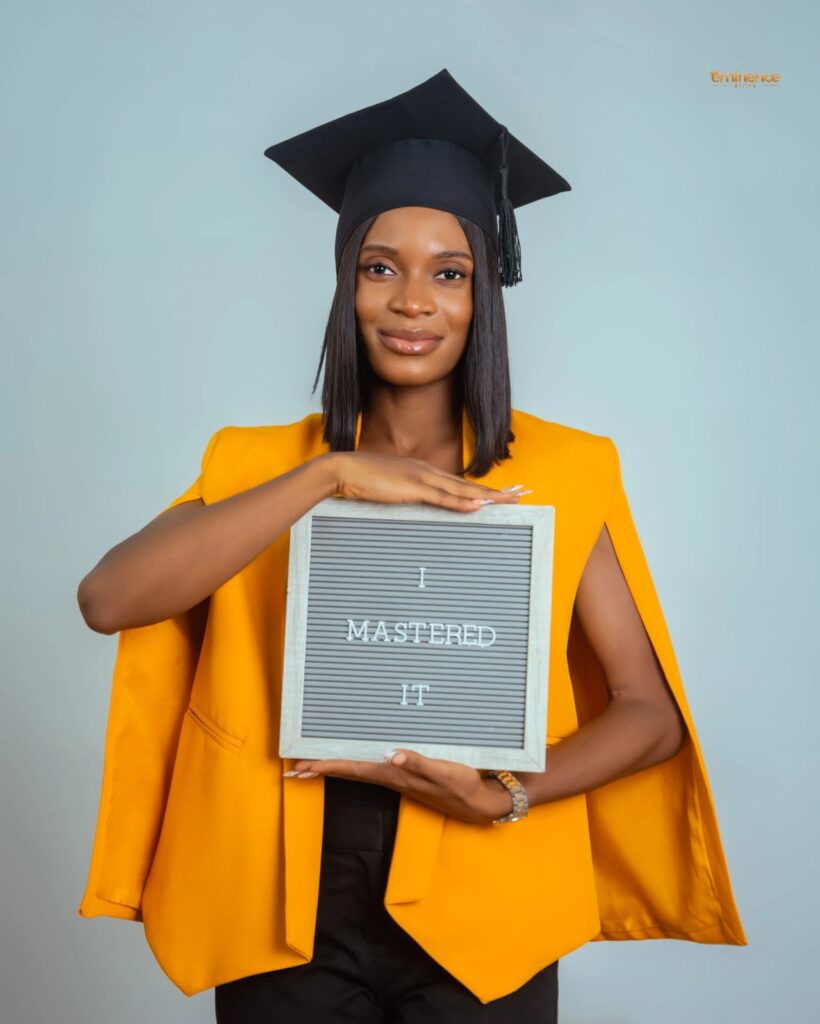
How do you find harmony outside of work? Are there hobbies, routines, or practices that help you stay grounded?
“It’s funny, because my work is so people-focused, the way I find harmony is also by being with people, just in very different ways.
My family is everything. My daughters are my world, and they are the main thing that keeps me grounded. Just being their mom, being a daughter to my own parents, being a sister to my siblings, or being a friend to my circle of women, these roles are my anchor and my support framework. They remind me of the simple things and keep me connected to what is truly important.
Then there are the things I do just for me that bring me joy. I love music, I love to dance and I love going for long walks, long drives, or road trips. It is my way of moving and feeling free.
And honestly, I also find harmony in a good challenge. I love to learn. For me, academic advancement is a hobby. A few years after I became a lawyer, I decided to pursue an MBA at the Institute of Public Administration and Management. It was tough, especially coming from a law background. I was really tested by the Math and Accounting modules. There was a point when I almost dropped out because it felt so overwhelming. But I made amazing friends in the program, and they encouraged me to keep going. We pushed each other, and we graduated. That feeling of accomplishment was incredible. It is probably why I have just gone back to do a Master’s in Law at Fourah Bay College, focusing on Human Rights, Constitutionalism, and Criminal Justice.
Is it easy? No. Juggling all of that with work, research, writing judgments, and being a mom is draining. There are plenty of nights I just crash. But when I think about it, I do not think I would trade it. The harmony for me is not in having loads of free time or a quiet life. It is in feeling fulfilled, in growing, in learning, and in being surrounded by the people I love.”
As you reflect on your journey, which experience or achievement has been the most meaningful to you, and what makes it so special?
“You know, people expect a certain answer from a magistrate. They expect me to name a landmark case, a piece of legislation, maybe that moment I survived MBA Math against all odds. And don’t get me wrong, I’m proud of those things. But if I’m being completely honest, the most meaningful achievements of my life do not sit in any law report. They sit at our kitchen table, probably refusing to eat their vegetables and giving their grandparents more work than they ever had with us.
It’s becoming a mother.
I have one biological daughter, Emalia, who arrived into my life like a tiny, demanding CEO. And through the beautiful chaos of life, I also inherited three more, Hawa-Grace, Julnie, and baby Damilare, my sister’s daughters but mine in every way that counts. So, I went from “Julia, the focused lawyer” to “Mum of four” in what felt like a blink. Nobody hands you a manual for that transition. One day you are drafting legal documents, the next you are mediating disputes over who had the pink bowl first, which cartoon they should watch next, or what they should wear for a party.
Here is what they don’t tell you about motherhood and career. They will constantly compete for the last scraps of your energy. Some days I walk into court after three hours of sleep because someone had a nightmare, refused to obey bedtime, or simply decided that 3 a.m. was the perfect time to eat cornflakes or drink tea. I have written judgments while jumping and shouting went on around me. I have attended virtual meetings with the girls crackling in the background like uninvited guests. Thank God for the mute function.
And I wouldn’t change a single second of it.
Here is the thing. The law teaches you about justice. But motherhood teaches you about everything else. It teaches patience when you have none left. It teaches that “fair” does not always mean “equal” because the five-year-old and the seven-year-old have very different needs. It teaches that impact is not always about the big cases you win. Sometimes impact is a three-year-old learning that her voice matters because you stop whatever you are doing to listen.
My daughters, all four of them, are growing up watching a woman who works, who studies, who shows up. They see me tired, they see me crash, but they also see me get back up. They see me laugh about the hilarious things they do and feel warm about how they compete to impress me. They see me dance to Golden from K-Pop Demon Hunters in the living room with them after a long week, or in the car with them as I drop them off for school. They see that their mother is a whole person, a magistrate, yes, but also someone who loves, tries hard, and believes she can conquer absolutely anything.
So, the most meaningful achievement of my life? It is not on any CV. It is not in any court record. It is scattered across four little hearts, and if I am lucky, it will shape the women they become.
Also, full disclosure: they still won’t eat their vegetables and they are still very picky with lunch for school. I am hoping the judiciary might eventually give me the power to rule on that. So far, no luck.”
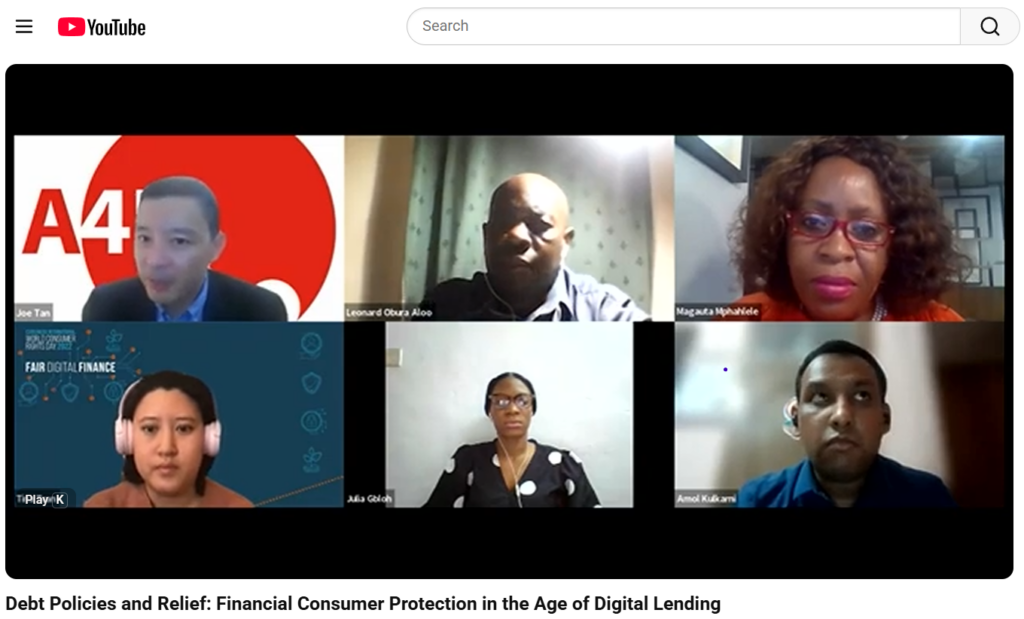
As someone shaping the present and future of justice in Sierra Leone, what legacy do you hope to leave for your community, the judiciary, and the generations that follow?
“You know, when I think about legacy, I do not picture a statue or a building with my name on it. I picture something quieter because I want my legacy to continue to grow after I have left the room.
I want my legacy to be that I showed up. Not perfectly. Not always with a full night’s sleep. But showing up regardless of the circumstances.
In my community, I hope to leave behind a simple but stubborn belief that justice belongs to everyone, not just those who can afford it, not just those who know the right people. Growing up in modest surroundings, I saw how easily people could be trapped by what they did not know. Their rights existed on paper, but it did not translate to their personal experiences. I want people to look at the law and think, “That is for me too. That is for my child. That is for my neighbor.” Whether through the work I did, the policies I helped shape, or simply the way I tried to treat every person who came before me with dignity, patience and the assumption that their story matters.
For the judiciary, I hope to leave a legacy of quiet integrity. I have been part of building an institution from scratch, and I have learned that the health of a system is not in the big, dramatic moments. It is in the small, boring things done right, every single time. So, if my time in the judiciary means anything, I hope it is this: that I respected the process, that I wrote my judgments with care, and that I remembered, always, that behind every file is a human being whose life is about to be touched by whatever decision I make.
And for the generations that follow, this one makes my heart full.
I have four daughters watching me: Emalia, Hawa-Grace, Julnie, and baby Damilare. They see me tired. They see me crash. They also see me get back up, dress up, and walk out that door. They see me study when I would rather sleep. They see me dance in the living room after a hard week. They see me laugh, and they have also seen me shed a few tears. They are learning, every single day, what it looks like to be a woman who works, who leads, who stumbles, and who tries again.
So, my legacy to them and to every young girl who might see someone like me and think, “I could do that too,” is simply this. You do not have to be perfect to be powerful. You do not have to have it all figured out to make a difference. You just have to keep showing up. Not because you are ready, not because you are rested. Show up because the world needs the particular way only you can hold it, tired hands and all.
I want young women in Sierra Leone to know that the path is not straight. I switched from science to arts. I almost dropped out of my MBA. I became a young mother, then a single mother, and then a mother to four. None of it looked like the plan I would have written at nine years old, dreaming of being a doctor. But here I am, owning it with joy and a sense of purpose.
In summary, I want a legacy that will include belief in a judiciary that works even when no one is watching, a community that knows its rights and knows it deserves them, and four girls (and hopefully many more) who grow up absolutely certain that they can hold the world in one hand and their family in the other, and still find time to laugh.
Also, if I could leave behind a rule that vegetables must be eaten without negotiation and that girls should not have boyfriends until they leave school, that would be nice too.”
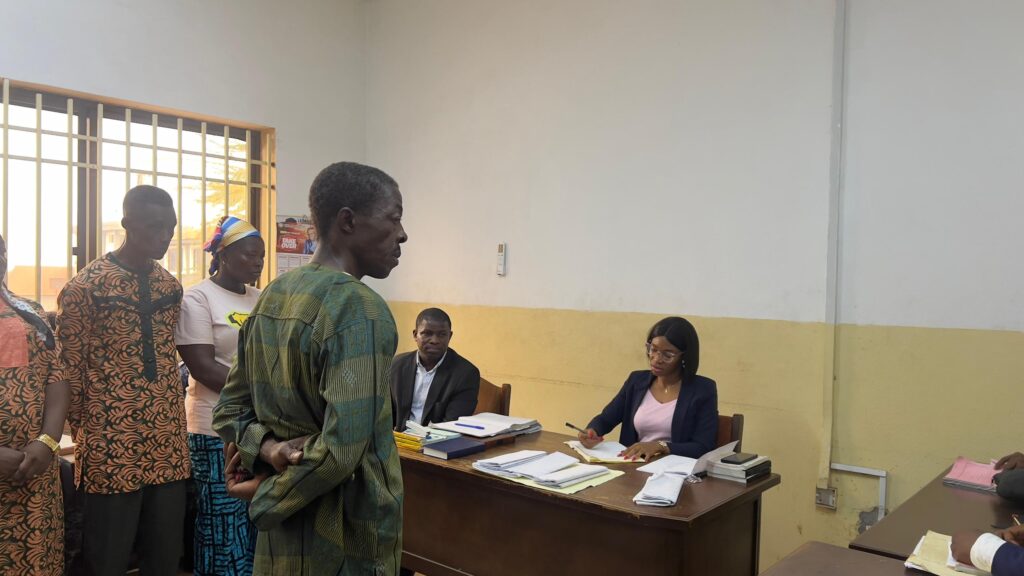
Family, Growth and the Roads We Travel
Her Worship Julia-Mary Gbloh’s journey demonstrates that life is rarely linear and that the choices we make are influenced by many factors, including unfulfilled dreams, new goals, family responsibilities, and a desire to serve. She is not only highly educated but also has a remarkable work experience. Beyond the bench, she is a proud mom of four girls, managing the demands of family life while continuing to excel in her legal career and public service.
Her work reflects a deep commitment to the principle of “Give To Gain,” showing that the time, energy and knowledge we invest in others can create lasting impact. Her journey shows that leadership is not only about knowledge and skill but also about humanity, patience and resilience.
According to the United Nations, even with women taking a more active role in public life, they remain significantly underrepresented in decision-making positions. The inclusion of women judges in spaces they were historically excluded from is a positive step toward creating judiciaries that are more transparent, inclusive and truly representative of the people whose lives they affect.
By breaking these barriers, her journey is a testament to the power of perseverance, the importance of representation, and the enduring influence of showing up, fully and authentically, in every role we inhabit.
Learn more about the Judiciary of Sierra Leone here: https://www.judiciary.gov.sl/?page_id=7










What an inspiring story!
Well done baby sister, we continue to be proud of you in all your undertakings. Continue to be focused and make sure you achieve your aim as a proud woman
This is a remarkable and thought-provoking piece. The judiciary is truly proud to have someone like Her Worship Julia Mary Gbloh, whose contributions continue to inspire confidence in the justice system. 🤍
Proud of you, Your Worship, Julia-Mary Gbloh!
Truly inspirational. Keep going!
So proud of you ma!!
You’re such an inspiration!!