












His Lordship Dr. Bedima Duut brings a rare blend of public health expertise and legal acumen to the bench. With a background that spans pharmacy, public health practice, and global health law, his career has been shaped by firsthand engagement with challenges such as maternal mortality, epidemics, and health system gaps in Ghana.
In this interview, he reflects on the journey that led him from health practice into law and how that experience continues to influence his judicial approach. From considering the broader population impact of legal decisions to interpreting health-related laws with a systems-oriented perspective, his work highlights the deep connection between law and public health.

What first drew you to the field of public health law, and how did your background as a public health specialist influence your decision to pursue law?
“My career began in pharmacy, after which I specialised in public health. During the course of my public health career, I had to repeatedly deal with epidemics, malnutrition, non-communicable diseases, maternal mortality, and a host of related challenges. Through that experience, I came to recognize a significant gap in the legal frameworks governing public health services in Ghana. That prompted me to explore how the law could be employed as a tool to improve population health outcomes and to strengthen health governance. It was that desire that ultimately drove me to pursue a legal career, and later to specialise in public and global health law.”
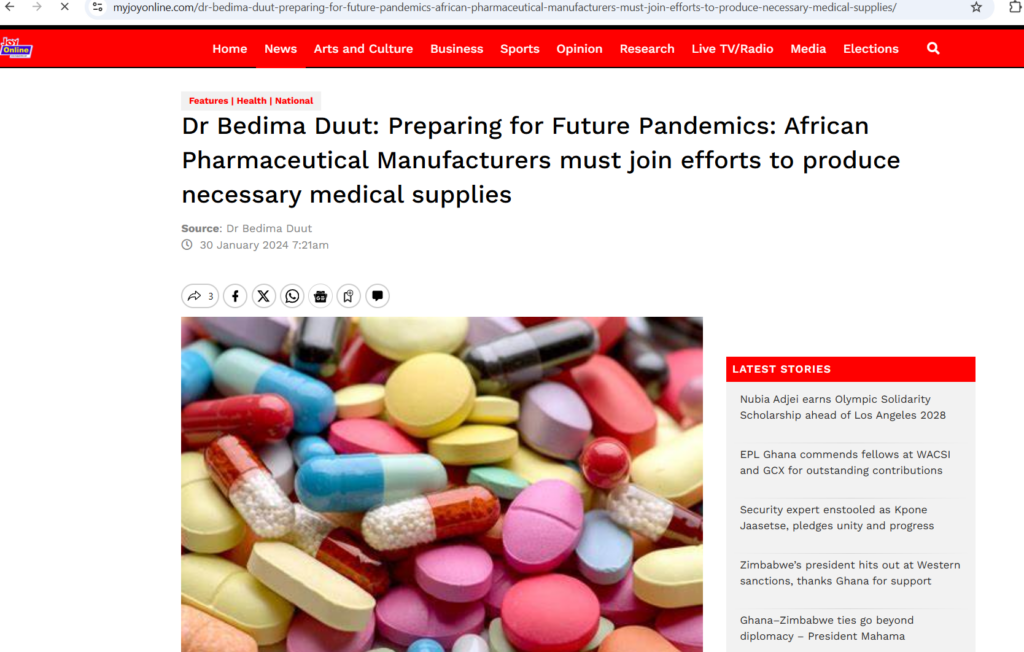
How has your expertise in public health law influenced the way you approach your work on the bench?
“My training in public health law instilled in me a habit of thinking in terms of populations rather than individuals. That orientation has carried over into my work on the bench. When a case comes before me, I do not confine my analysis to the interests of the parties in the dock or at the bar. I try to diagnose the problem from a wider Ghanaian perspective and, where relevant, from the wider African context.
The population perspective shapes the way I formulate my judgments. I am mindful that judicial decisions do not end in the courtroom and with the parties. They ripple outward and can affect communities and systems well beyond the immediate dispute. In that sense, my grounding in public health law continues to inform and practically influence my judicial reasoning.”
Which moments or milestones in your career in public health law stand out as the most significant to you?
“There are several milestones I could mention, but allow me to speak to the one that I look back on with pride and satisfaction. I was posted as District Director of Health to a district that had recorded an average of eight maternal deaths annually over the preceding four years. My supervisor set me a clear mandate: to reduce that figure. I responded by designing an elaborate programme and a detailed action plan, mobilising a dedicated team, and implementing the plan religiously. Within three years, we had reduced the maternal death toll from an average of eight per year to zero. For the next nine years or so that I remained in that district, there was not a single maternal death recorded.
There was also the collateral benefit of measurable reductions in child mortality and malnutrition rates across the district. I have always regarded that achievement as one of the most meaningful of my career, and I cherish it to this day.”

As a judge with a background in public health law, how do you see your expertise contributing to strengthening health systems and governance in Ghana?
“I do not see public health and law as separate domains. Health systems are built on legal architecture: legislation, regulation, enforcement, and accountability. And the courts sit at the center of that architecture.
My background in public health law has taught me that weak health systems are rarely the result of technical failure alone. They are almost always failures of law and governance. The court is itself a governance institution and a tool. Its decisions shape policy and government conduct, with direct consequences for people’s lives. Let me illustrate with three areas where my specialized knowledge in public health bears, or will bear, directly on my work at the bench.
First, statutory interpretation. When health-related legislation comes before me, my public health background enables me to interpret it in light of its regulatory purpose and its population-health objectives, whether the subject matter is medical malpractice, food safety, drug and opioid abuse, water and sanitation, environmental health, or occupational safety. Population health-driven interpretation informs my decisions.
Second, accountability in public health governance. Although I am yet to sit on judicial review proceedings involving health authorities such as the Ghana Health Service, the Food and Drugs Authority, or the Ministry of Health, my public health literacy positions me to probe the rationality and procedural fairness of their decisions with greater depth and rigour than a judge without that grounding.
Third, health as a fundamental human right. My public health background equips me to give meaningful content to the right to health within the framework of the Ghanaian Constitution and to adjudicate on its intersection with other constitutionally protected rights.
At the systemic level, Ghana’s health system, like those of many African countries, faces persistent challenges: chronic underfunding, regulatory gaps, and weak accountability for health institutions and personnel. Litigation and judicial oversight are potent instruments for addressing these challenges, but only where judges understand what good health governance looks like in practice.
I see my current role as contributing to the foundation of a culture of judicial accountability in health governance — one where health authorities understand that their decisions are subject to review by courts that comprehend their practical and public health implications. My aspiration is to help build a judiciary that does not merely resolve disputes, but becomes a structural part of the health governance architecture, holding the system accountable to the people it serves.
Should the opportunity arise, I would carry that philosophy into regional and continental forums—at the level of ECOWAS and the African Union—where the legal dimensions of health governance remain underdeveloped and where judicial voices are needed.”
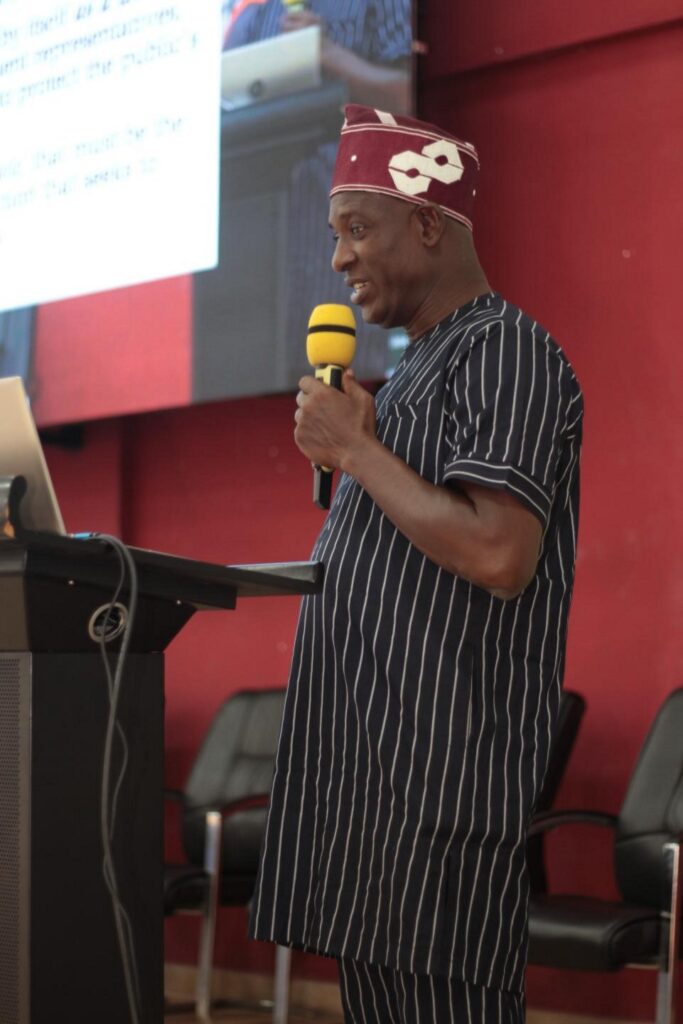
What lessons or insights from your career would you share with others interested in combining law and public health?
“Nothing happens by accident. A career, like a well-argued case, must be deliberately constructed. My own path began in pharmacy, passed through public health, and arrived, in time, at the bench. That progression was not incidental. My entry into law was informed by a prior, working understanding of how health systems ought to function, their design, their gaps, and their failures.
It was precisely those gaps that motivated me to pursue law as an instrument of change. To young people navigating their professional lives, I offer this: seek exposure across disciplines. The years I spent in health before law have built a capacity in me that no classroom alone could have supplied, an understanding of how health institutions actually operate in terms of their mandates, constraints, and, of course, their politics.
The most important insight for anyone working at the intersection of law and public health is this: law is not adjacent, opposite, or an addition to public health, it is an instrument of it. Law creates mandates, prohibitions, and protections, all in furtherance of population well-being. One must therefore understand how constitutional rights, statutory mandates, and regulatory regimes can be deliberately deployed to improve health outcomes. The lawyer or judge who grasps this does not simply apply rules; they participate, knowingly, in shaping the conditions under which people live and die.
From the bench, I have come to appreciate how purposive interpretation and faithful application of health-related laws and policies in areas spanning patient safety, food and nutrition, environmental health, and pharmaceuticals carry real and lasting consequences for the health and well-being of Ghanaians. Judicial decisions in these domains are never merely technical exercises.
Finally, there is a discipline worth consciously developing: the ability to work across different professional rhythms. Public health emergencies demand urgent, evidence-based responses grounded in epidemiological reasoning. The law, by contrast, demands slow procedural fidelity and precision, based on established legal principles. Neither can be sacrificed for the other. Learning to hold both, to think with scientific rigour and act with legal exactitude, is among the most valuable competencies available to those who serve at this intersection.”

Advancing Health Justice
In advancing health justice, His Lordship Dr. Bedima Duut offers a compelling example of how professional experience and judicial responsibility can align to serve the broader public good. His journey from pharmacy and public health practice to the bench reflects a deep commitment to addressing systemic health challenges through both practical intervention and legal frameworks.
His experience confronting issues such as maternal mortality and health system gaps, combined with his current role in interpreting and applying the law, underscores the importance of integrating public health perspectives into legal decision-making. This approach reinforces the principles embedded in Goal 3 of the Sustainable Development Goals, which calls for ensuring healthy lives and promoting well-being for all. By viewing legal decisions through a population health lens, he highlights how the judiciary can contribute to stronger governance, improved accountability, and more equitable health outcomes.
Ultimately, his story illustrates that advancing health justice is not limited to the health sector alone. It requires the active engagement of legal institutions and professionals who understand how law can shape access, quality, and fairness in healthcare systems, ensuring that the promise of Goal 3 becomes a lived reality for communities.
Learn more about the Judiciary Service of Ghana here: https://judicial.gov.gh/