













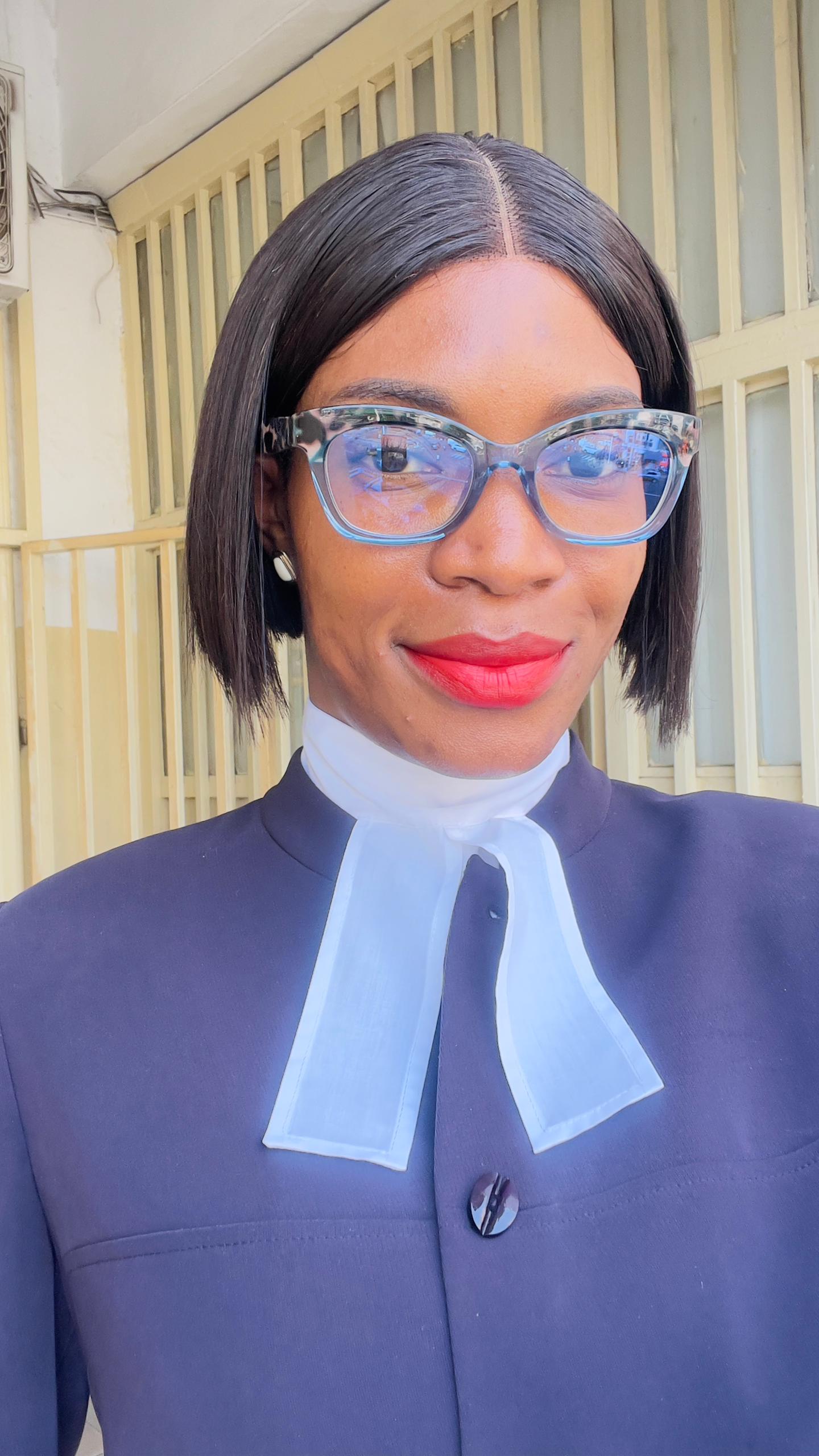
By Julia-Mary Gbloh
To God be the glory! I begin this reflection with deep gratitude to Almighty God, whose grace has sustained me through every step of this journey. A year ago, I was recruited to serve as a Magistrate. An opportunity I regard not only as professional advancement and service to my country but also as proof that young people can occupy spaces and deliver.
Over 600 criminal and 42 civil matters, ranging from minor disputes to serious offences, with a significant number concluded through both custodial and non-custodial decisions. It has been a year of profound transition, from the relative quiet of providing legal services to clients and institutions to the gavel-wielding responsibility of delivering justice.
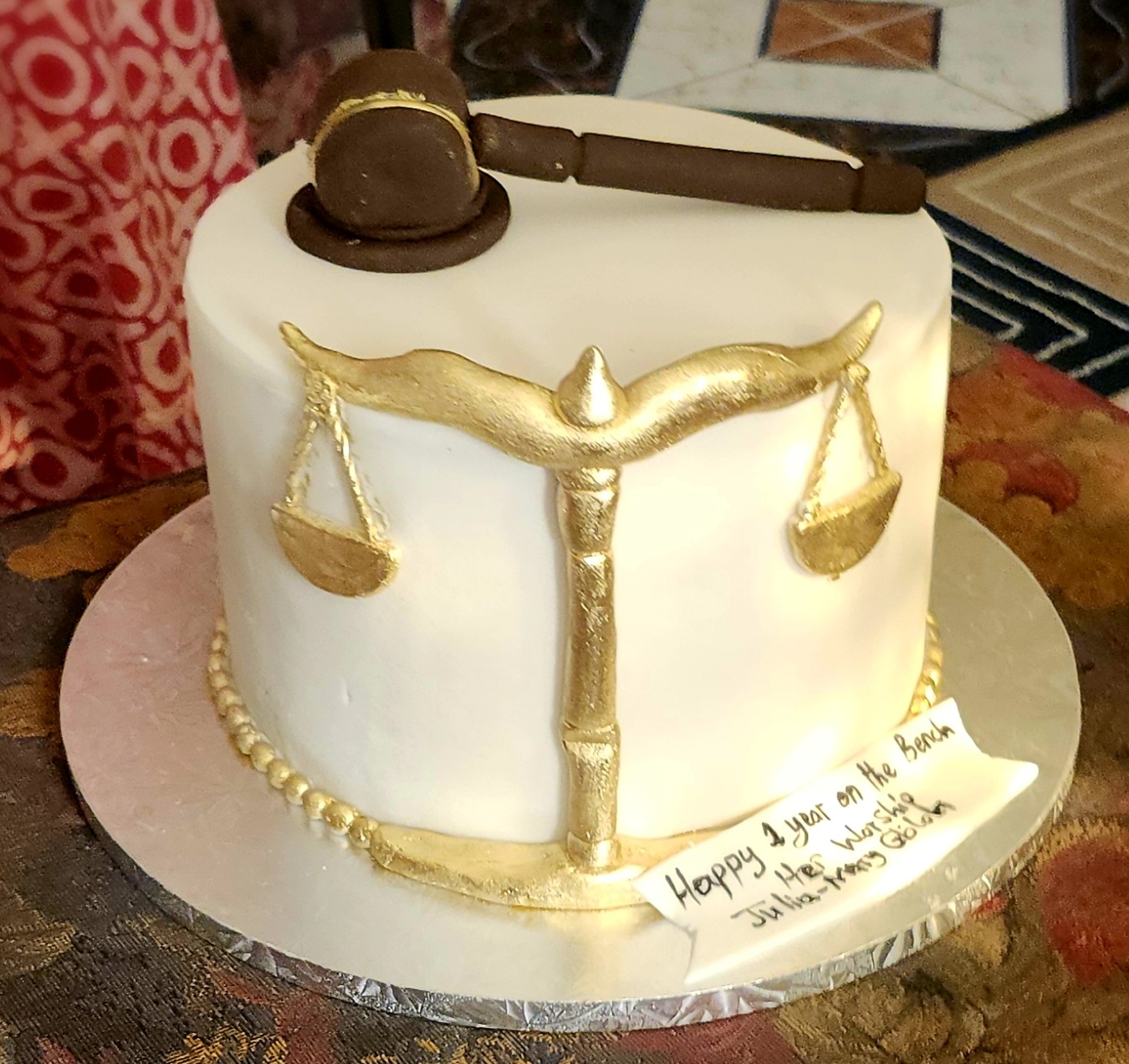
Let me start by acknowledging the obvious: I did not get here on my own. My decision to come to the bench was divinely orchestrated by God. I want to specially mention my boss, the Learned Honourable Chief Justice Komba Kamanda JSC, who, through the Judicial and Legal Service Commission, initiated the process through which I and 12 other persons were recruited.
Another person that is noteworthy is my friend Ibrahim Sorie Mansaray, Esq., who called me up and persuaded me to apply. Ibrahim, if you’re reading this, I hope you’re proud. I also hope you’re prepared to accept partial responsibility for any dramatic courtroom moments that may or may not have happened. (Just kidding.)
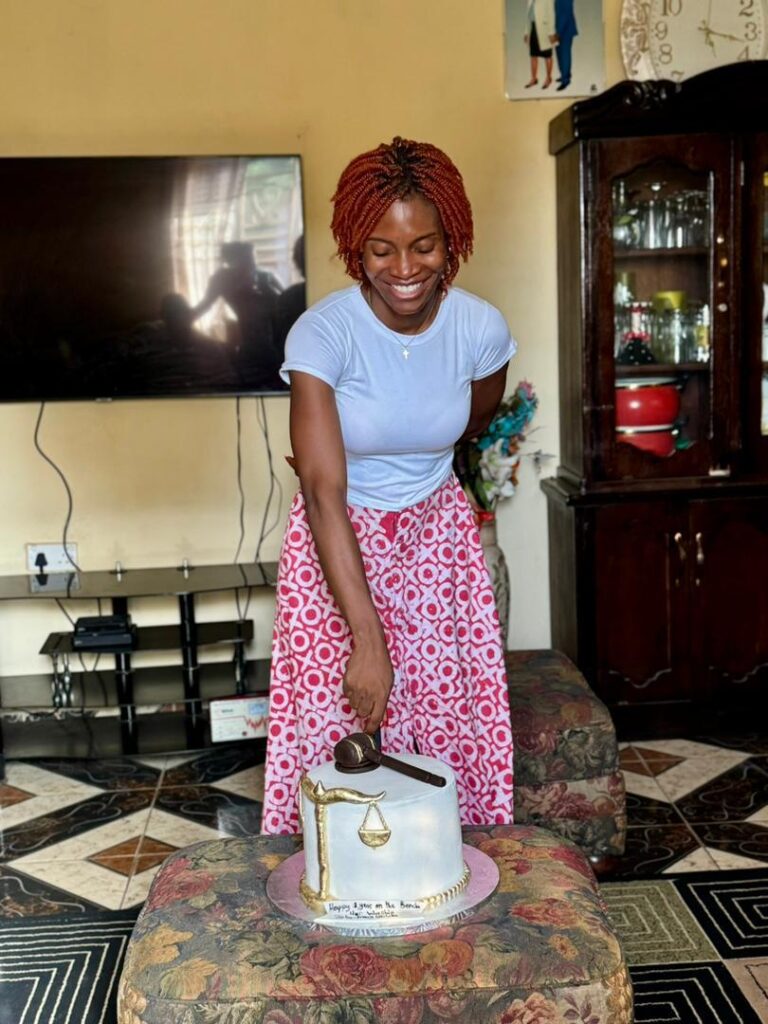
When I first sat on the bench, I had a very clear vision. I would be tough, rigorous, and uncompromising in the application of the law. One fateful day, a learned senior counsel spoke to me about going beyond the law and looking at the lives affected by it. I had a deep reflection on what he had said and what I truly wanted to bring to this position.
That reflection led me to an approach I hadn’t fully considered before, using the law as a weapon of social change. Let me tell you about one case that will stay with me. A young man brought three of his friends to court for assault. I use “friends” generously here, because friends don’t usually assault each other. They were between the ages of 19 and 21, lived in the same community, and from the evidence, it was painfully clear they were actually close friends who had had a falling out. The evidence supported a custodial sentence. Strict application of the law would have sent them away.
After careful consideration, I ordered that the defendants apologize to the complainant and clean around the court premises under supervision. I watched three young men apologize through tears while their friend, the complainant, hugged them and said he forgave them. That moment will stay with me longer than any sentence I could have imposed.
This decision will not be free from criticism, but I saw it as a second chance for those young men. It was a small act of restorative justice that gave me a profound sense of fulfillment and slightly cleaner court premises. I am still strict on processes and procedures, and I believe that the justice system should protect the greater good, but I also realize that sometimes restorative justice asks us to be a different kind of hero. One who restores the humanity of everyone involved, the victim, the perpetrator (especially first-time offenders), and the community.

This year has tested me in ways I did not know possible. My values, beliefs, principles, and prejudices sometimes crept in, and I had to fight to rise above them. Some days, that fight was visible. Other days, it was an internal wrestling match while maintaining what I hoped was a dignified, magistrate-ly expression.
I have also learned that being a female magistrate comes with its own special flavor of adventures. There have been moments when I had to assert authority more firmly. I have been far from perfect, but I have strived to run a courtroom that is respectful, orderly, fair, and transparent.
People tend to forget that Judges and Magistrates are humans too. We have families, friends, relationships, and sleepless nights too. Finding the balance between being a magistrate, a daughter, a mother, a sister, and a friend is something I’ve had to grapple with. Sometimes people don’t understand that you are a different person now, that you cannot simply “call the magistrate, she’ll sort it out” or that you cannot “just have a word” with the magistrate about their case, because it might prejudice her mind.
Trying to maintain that balance can be misread. I have learned to explain that my role requires certain boundaries, even as I remain the same person who still dances to silly songs in the car with my kids or enjoys hanging out with my friends. But I am learning, and they are learning along with me.
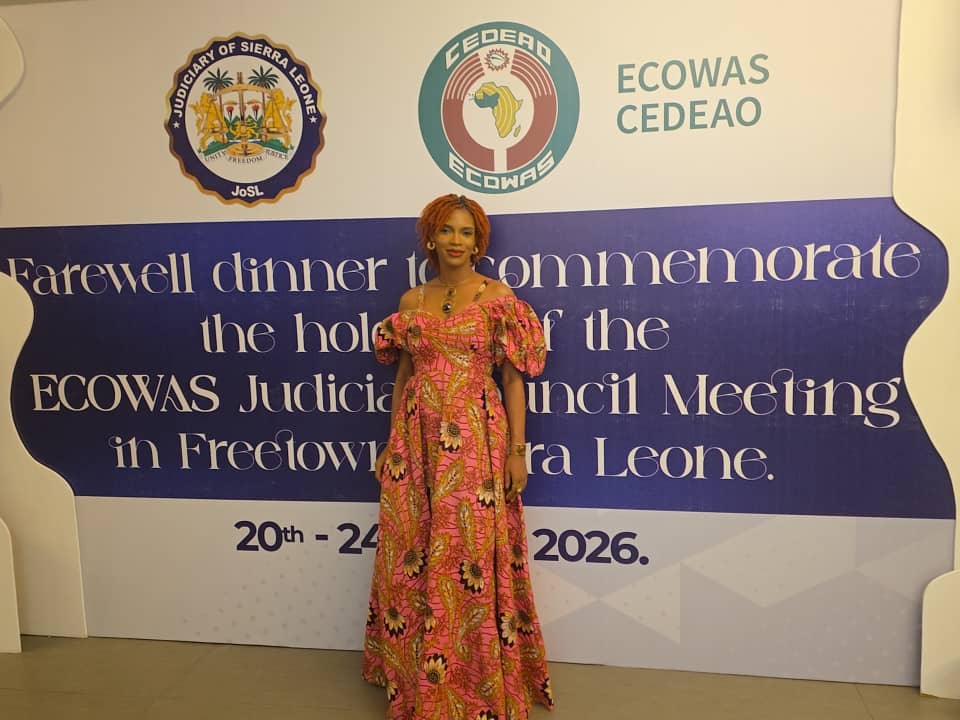
No reflection of my first year will be complete without acknowledging the remarkable women I have had the privilege of serving with. Our batch has five vibrant female magistrates, and the bond between us became one of the unexpected anchors of my first year. We have formed an informal support network that includes group chats, emergency venting sessions, and the kind of understanding that only comes from women doing the same challenging job. In addition, senior benchers opened their arms, welcomed us into the fold, and kept the communication lines open. As I look ahead, I am proud to be part of this growing community of women on the bench. We are standing on the shoulders of pioneering female Justices and Magistrates who opened doors we now walk through, and we are holding them open for those coming behind us.

To my parents, I owe the deepest gratitude. They instilled in me from a young age the values of integrity, hard work, and empathy, qualities that have proven far more essential to this role than any legal principle I learned in a textbook. Their quiet sacrifices, unwavering belief in me, and countless prayers offered on my behalf are my inspiration through the most demanding days.
To my siblings, thank you for keeping me grounded. Your humour reminds me not to take myself too seriously, even when the weight of a difficult judgment feels heavy. Your pride in my work gives me strength on days when I question whether I am making a difference. And to my family and friends (especially my circle of women), who support me and celebrate each small milestone as if it were their own, I am forever grateful. Your presence in my life is a constant reminder that while a magistrate must stand apart in impartiality, she need not stand alone. Thank you all for your love and support.

As I begin my second year, I carry with me the lessons of the first. I have learned that as a bencher, your role exceeds being a legal expert who passes judgment. In addition, you must be an administrator, a psychologist, a social worker, a pillar of moral clarity, and, occasionally, a mediator of disputes that should never have made it to a courtroom.
The challenges remain immense, and the pressures from outside forces are an ever-present reality. Yet I am more hopeful than ever. My first year was about learning to be a magistrate. The years to come by God’s grace will be about being one and striving to ensure that the law serves and protects the people, and justice is an achievable reality.
I also learned to keep a spare pen. You would not believe how many pens go missing or finish in a courtroom. Future tip for new benchers: always have a spare pen with you. You’ll thank me later.
Lastly, always eat; you will not believe how unexpectedly long some hearings can go. A hungry magistrate is not a patient magistrate.











Congratulations!