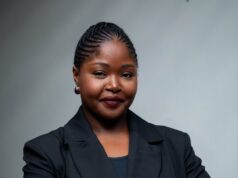











Meet Martina Baindu Egbenda, the Administrator and Registrar General of Sierra Leone, a distinguished legal practitioner, and a member of both the Sierra Leone Bar Association and the Commonwealth Lawyers Association. She holds a Master of Laws in Comparative Constitutional Law from the Central European University in Budapest, Hungary, a Bachelor of Laws with Honours from Fourah Bay College, University of Sierra Leone, and a Barrister-at-Law qualification from the Sierra Leone Law School.
Throughout her career, Martina has successfully led and managed impactful judiciary reform projects supported by the United Nations Development Programme, the Open Society Initiative for West Africa, and the United Kingdom-Sierra Leone Pro Bono Project, contributing significantly to the advancement of Sierra Leone’s justice sector.
In this feature, we engage Martina to learn more about her leadership journey, professional achievements, and future aspirations.
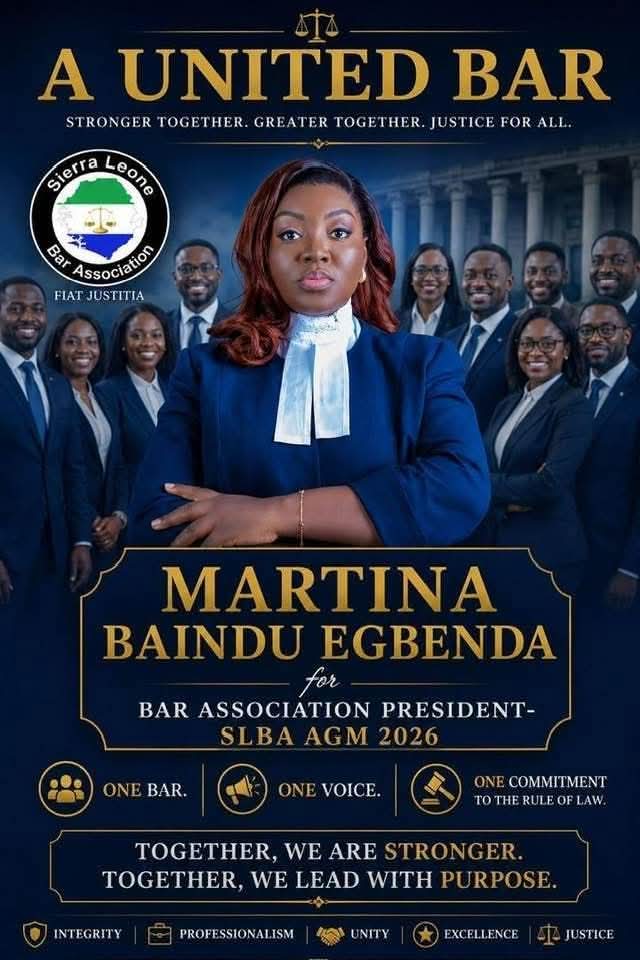
You recently announced your decision to run for President of the Sierra Leone Bar Association in 2026. What inspired this decision, and why do you believe this is the right moment to step forward and serve?
“My journey in law has never been driven by convenience. It has always been driven by purpose. Over 14 years, I have served this country in some of its most demanding legal and institutional roles; from prosecuting criminal matters in the Superior Courts to advising the Constitutional Review Committee to serving as Director of Legal and Corporate Affairs at the National Revenue Authority, and now as Administrator and Registrar General. Each of these roles has given me a front-row seat to the strengths and the gaps within our legal system and our profession. What inspired me to step forward is precisely that experience. I have seen what strong, principled leadership can produce, and I have equally seen what its absence costs us. The Sierra Leone Bar Association deserves leadership that is not just passionate but proven. I have spent 14 years building the competencies in litigation, administration, policy, and institutional reform that this role demands.
Why now? Because the profession cannot afford to wait. We are at a defining moment in Sierra Leone’s democratic development, and the Bar must rise to meet it. I believe this is my moment to bring everything I have learned and everything I stand for to the service of my colleagues and my country.”

In your announcement, you emphasized the need for a “United Bar.” What does unity within the Sierra Leone Bar Association mean to you, and why is it so important at this stage in the Association’s history?
“Unity, to me, is not the absence of disagreement. We are lawyers, after all, and robust debate is in our DNA. What I mean by a united Bar is an Association where every member, from the newly called barrister to the most senior counsel, feels a genuine sense of ownership, inclusion, and shared mission. My career has been defined by collaboration across institutions. At the Judiciary, I worked alongside international partners, including UNDP, OSIWA, and the UK-Sierra Leone Pro Bono Project, to implement reforms that benefited the entire justice system. That work taught me that transformative outcomes require people to set aside personal agendas and commit to a common goal. I want to bring that same spirit to the Bar Association. We have allowed divisions, whether political, generational, or personal, to distract us from our collective mandate. A united Bar speaks with authority on constitutional matters, defends the rule of law without fear, and advocates for its members with credibility. Without unity, we are simply a collection of individuals. With Unity, we become an institution that Sierra Leone can rely upon.”
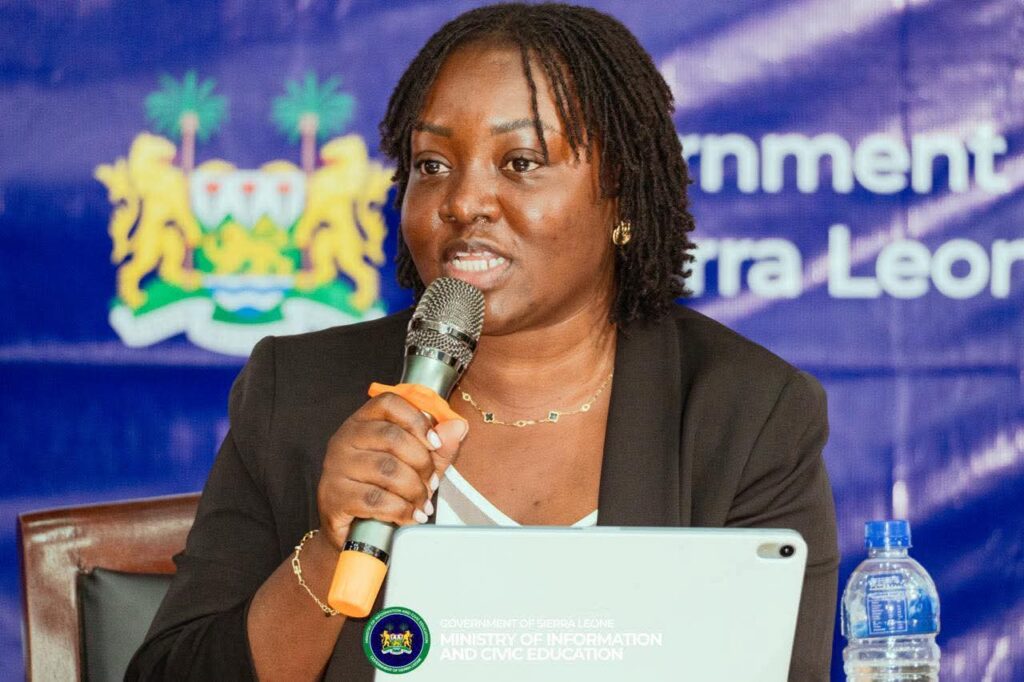
Your message speaks strongly about professionalism, the rule of law, and restoring confidence in the Bar Association. From your own experiences within the legal profession, what challenges do you believe lawyers in Sierra Leone are facing today, and how do you hope to address them?
“I speak to these challenges not as an outsider observing from a distance but as someone who has lived them. I know what it means to be a young lawyer finding your footing in a profession that does not always make space for you. I was voted the youngest legal practitioner by Eminence-Africa in 2018, a recognition I cherish, but also one that reminded me of how few structured pathways exist for emerging legal talent in Sierra Leone. Today, our lawyers face a combination of economic pressures, limited access to legal resources, inadequate support for young practitioners, particularly women, and a public that has, in many instances, lost confidence in the legal system. These are not small problems. They require deliberate, structured responses. Drawing on my experience implementing judicial reform projects for international organizations, I intend to introduce structured continuing legal education; establish meaningful mentorship frameworks, especially for women, as my involvement with L.A.W.Y.E.R.S.-the Legal Access through Women Yearning for Equality Rights and Social Justice network reflects and push for greater access to legal research tools. My background in legal research, having contributed to the proposed Constitution of Sierra Leone through the Justice Cowan Constitutional Review Committee, also positions me to drive evidence-based advocacy for systemic reform within the profession.”
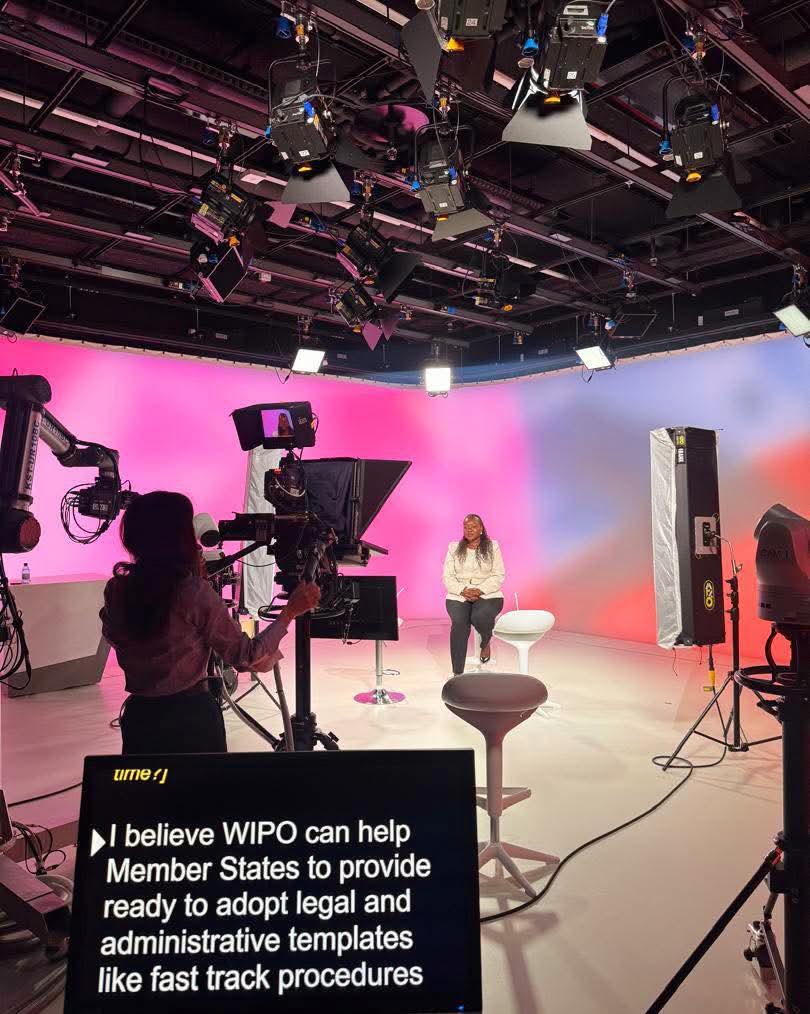
Leadership often comes with difficult moments and important lessons. Can you share experiences from your legal career or service to the profession that have shaped your leadership style and prepared you for this role?
“Every role I have held has added a layer to who I am as a leader. Leading prosecutions and securing convictions in the High Court taught me precision, preparation, and composure under pressure. Drafting the action plan for the National Money Laundering and Terrorism Financing Risk Assessment at the Financial Intelligence Unit taught me the importance of rigor and collaboration in high-stakes environments. Managing multi-donor judicial reform projects for UNDP, OSIWA, and the UK-Sierra Leone Pro Bono Project taught me how to deliver results while managing competing interests and expectations. Then there is my appointment as Director of Legal and Corporate Affairs at the National Revenue Authority, the youngest person to hold that position, and most recently, my appointment by His Excellency the President as Administrator and Registrar General in January 2025. These are not ceremonial titles. They are roles that demanded real accountability, institutional leadership, and the ability to make consequential decisions.
My leadership style is collaborative but decisive. I listen, I consult, and I build consensus, but when a decision must be made, I make it, and I own it. That is the kind of leadership the Bar Association needs right now.”
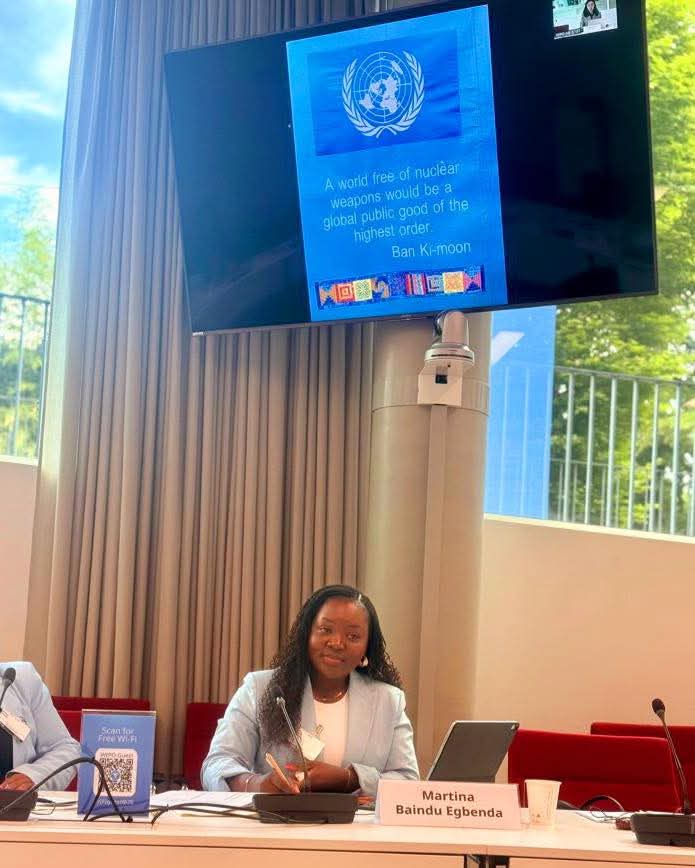
Looking ahead, what is your long-term vision for the Sierra Leone Bar Association, and what kind of legacy would you hope to leave behind for future generations of lawyers?
“My vision is for a Sierra Leone Bar Association that commands respect from the government, from the judiciary, from the public, and from the international legal community. An Association that is administratively excellent, professionally vibrant, and uncompromising in its defense of the rule of law and constitutional governance. I want to modernize the Bar’s institutional structures, drawing on my experience as a registrar and administrator. I want to deepen its engagement with regional and international bodies, leveraging networks I have built across my career. And I want to make the Bar a place where a young woman reading law at Fourah Bay College today can look ahead and see a clear, supported path to professional fulfillment because I was once that young woman.
The legacy I hope to leave is one of restoration and transformation. Restoration of trust, unity, and professional pride within the Bar. And a transformation in how the Bar positions itself as an indispensable pillar of Sierra Leone’s democracy and development. I hold an LLM in Comparative Constitutional Law from the Central European University in Budapest. I have studied how legal institutions across the world evolve and strengthen. I am bringing all of that- every qualification, every case, every project, every lesson to this candidacy. Not for myself, but for the profession and the country I love.”
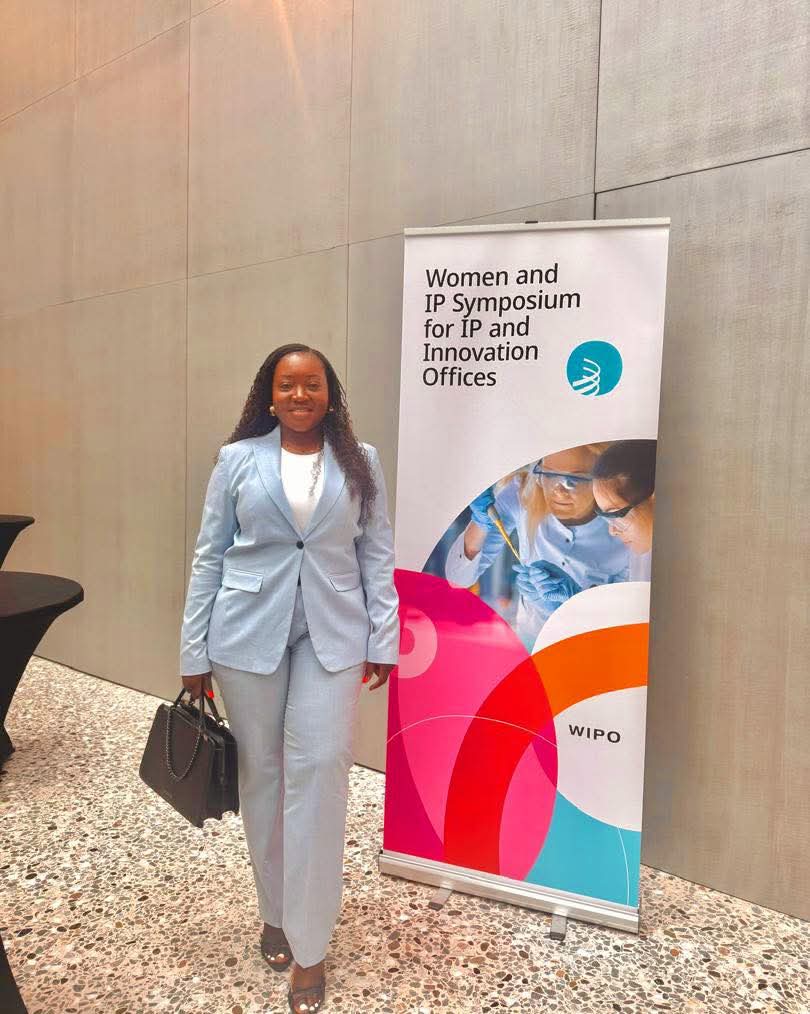
Intentional Leadership
Martina Baindu Egbenda’s story is one of intentional leadership grounded in purpose, service, and institutional transformation. From the courtroom to national administration, her journey reflects a consistent commitment to strengthening the rule of law, advancing justice, and creating opportunities for the next generation of legal professionals in Sierra Leone.
Her vision for the Sierra Leone Bar Association goes beyond titles or personal ambition. It is rooted in unity, professionalism, accountability, and the belief that strong institutions are essential to democracy and national development. Through years of experience in litigation, legal reform, policy development, and public administration, Martina has demonstrated that leadership is most effective when it is deliberate, inclusive, and guided by principle.
As she looks toward the future, her message is clear: meaningful change does not happen by chance. It requires courage, preparation, collaboration, and an unwavering commitment to service. Martina Baindu Egbenda represents a generation of leaders determined not only to lead but also to lead with intention.

Learn more about her work here: https://www.linkedin.com/in/martina-egbenda-11a17ba4/